ON DISPLAY FROM 17-19 SEPTEMBER . AMSTERDAM
ON DISPLAY FROM 17-19 SEPTEMBER . AMSTERDAM
مراسلات في زمن الإبادة
بدأ هذا العمل من هاتفي، من رسائل قصيرة كنت أفتحها كل يوم وأنا أبحث عن خبر يطمئنني، أو كلمات تقرّبني ممن فرّقتني عنهم الحدود والمسافات
منذ أكثر من ثلاث سنوات، أتبادل الرسائل مع عائلتي في الناصرة، وابنتي في الضفة الغربية، وصديقتي في غزة، وصديقي في بيروت، ومع أصدقائي الأوروبيين الذين يحاولون أن يفهموا ما نعيشه. في هذه المحادثات، تتجاور تفاصيل الحياة الصغيرة مع الخوف والفقد والانتظار: سؤال عن الطحين أو البطانيات، ليلة باردة في خيمة، طريق طويل عبر الحواجز، قلق على أهل لا يملكون ملجأ، أو كلمات نحاول من خلالها أن نحمل بعضنا بعضاً حين يصبح القرب مستحيلاً
جمعتُ أجزاءً من هذه المراسلات، ونقلتها من الضوء العابر للشاشة إلى شظايا من البورسلان. حفرتُ الكلمات عليها، ثم خِطتُها واحدة تلو الأخرى على ثوب فلسطيني. كل شظية تحمل صوتاً، وكل غرزة تصل بين جسد غائب ومكان بعيد وذاكرة أخشى عليها من المحو
بالنسبة لي، هذا الثوب ليس مجرد سطح يحمل النصوص. إنه جسد معلّق، مثقل بما وصلني ممن أحب، وبما أحمله أنا كفلسطينية أعيش في الغربة: الخوف عن بُعد، العجز، الانتظار، والحنين المستمر إلى العودة. المسافة لا تحمينا مما يحدث، بل تجعلنا نحمله بطريقة أخرى، بصمت، في أجسادنا وفي تفاصيل أيامنا
كما كتبت جدّاتنا قصصهن على أثوابهن بالخيط والتطريز، أكتب أنا قصتنا على هذا الثوب بالبورسلان والخيط. أحاول أن أحفظ ما قيل بيننا، لا بوصفه أرشيفاً للأحداث فقط، بل أثراً حميماً للحب والخوف والصمود، وشهادة على محاولتنا المستمرة للبقاء معاً رغم كل ما يفرّقنا
.العمل لم يكتمل. فالإبادة ما زالت مستمرة، والمحادثات بيننا لا تزال مستمرة أيضاً
Correspondence in Times of Genocide
This work began on my phone, in the short messages I opened each day, searching for a sign that someone I loved was still safe. Through these words, I tried to stay close to people whom borders, distance, occupation, and war had placed beyond my reach.
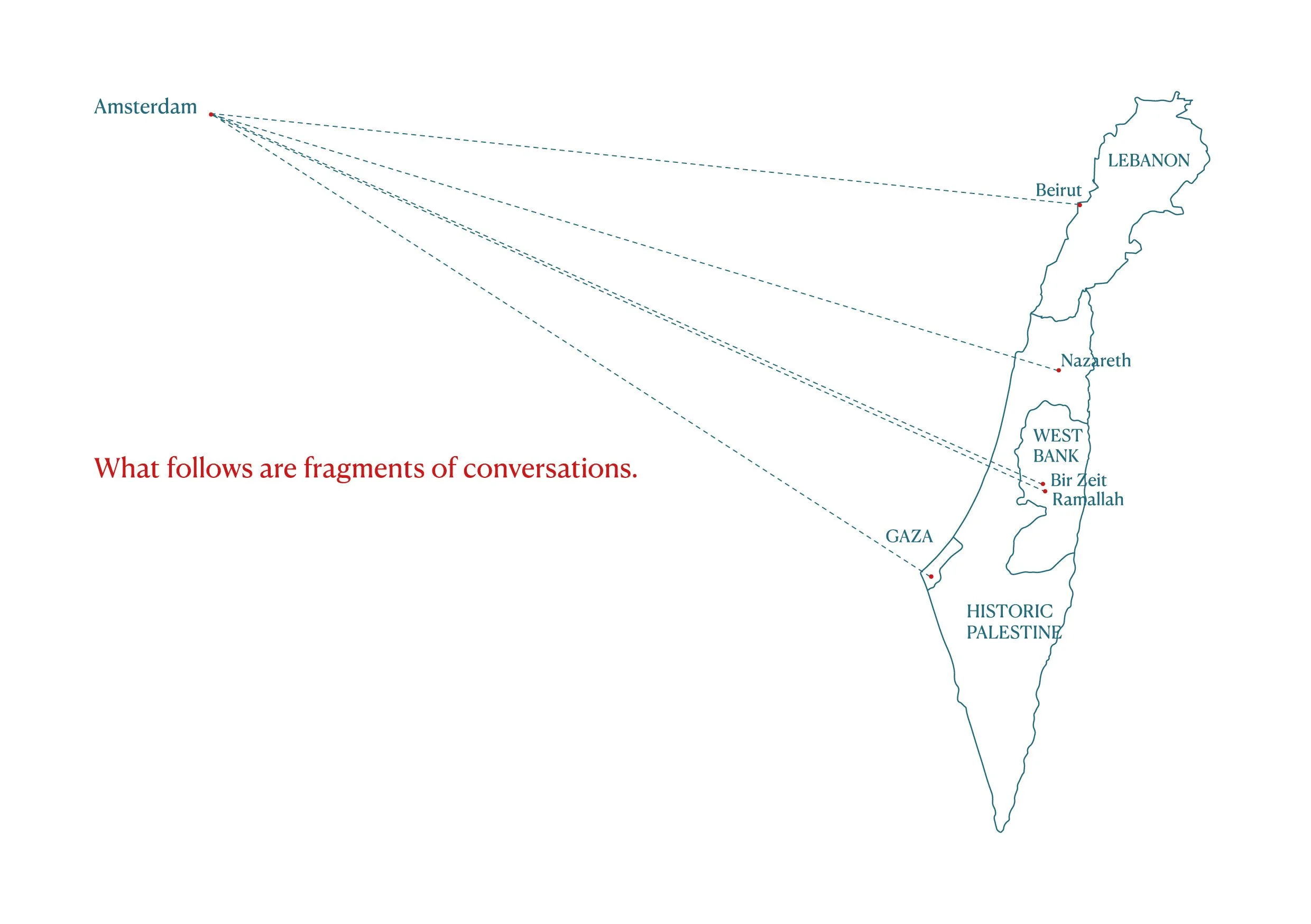
For more than three years, I have been exchanging messages with my family in Nazareth, my daughter in the West Bank, my friend in Gaza, my friend in Beirut, and my European friends who have been trying to understand what we are living through.
Within these conversations, the smallest details of daily life sit beside fear, loss, waiting, and hope: a question about flour or blankets, a freezing night in a tent, a long journey through military checkpoints, worry for family members without access to shelters, and the words we use to hold one another when being physically present is impossible.
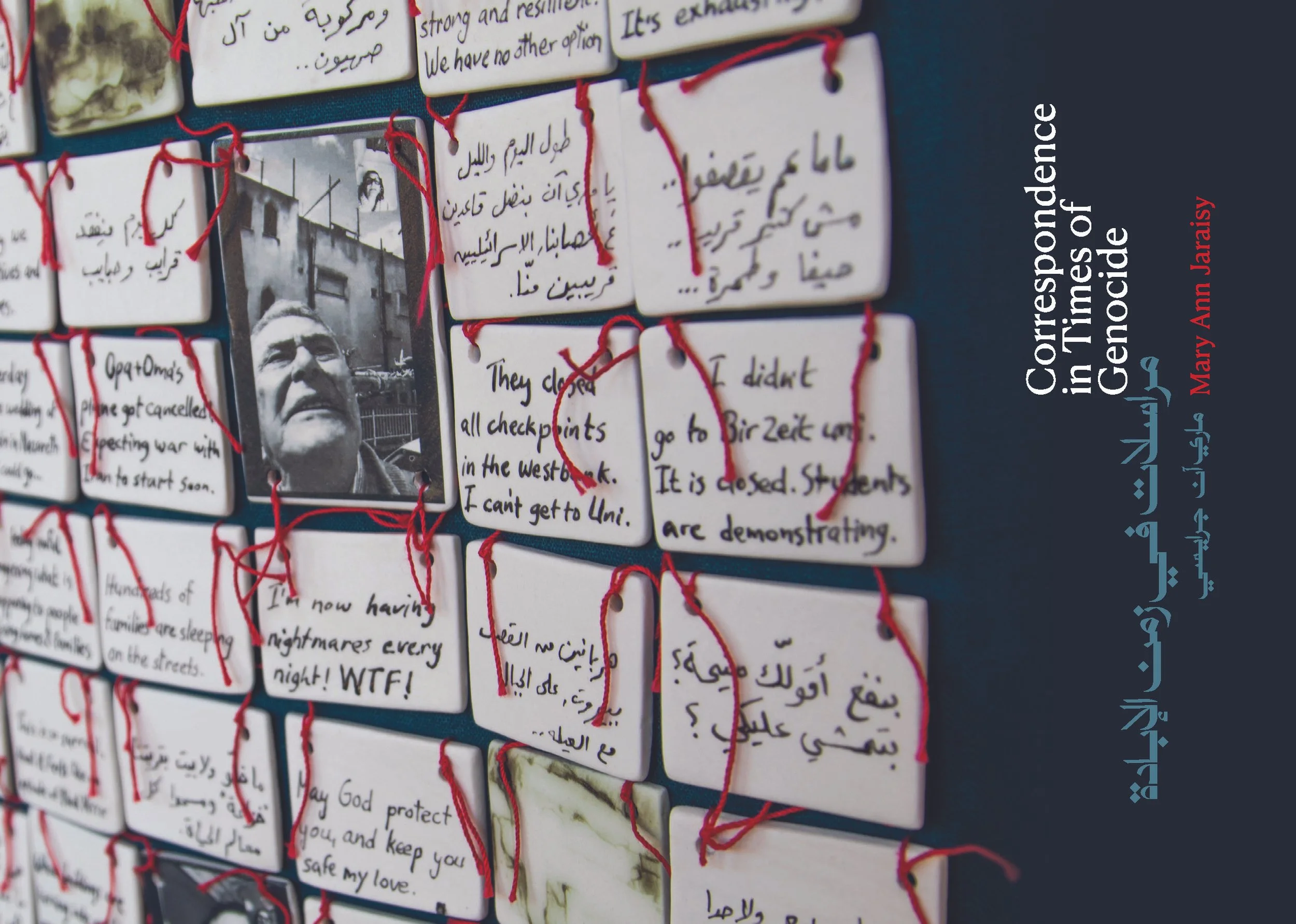
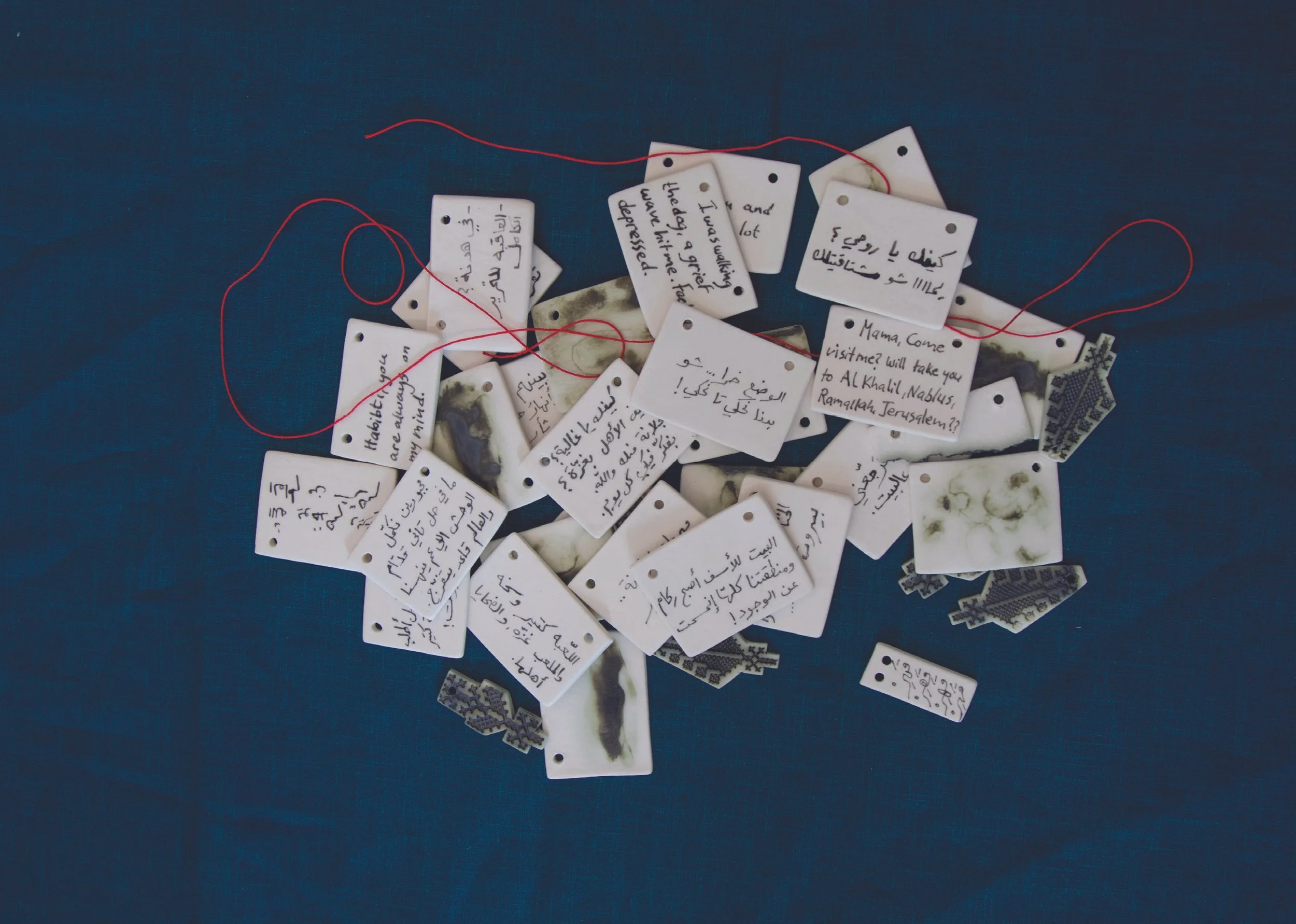
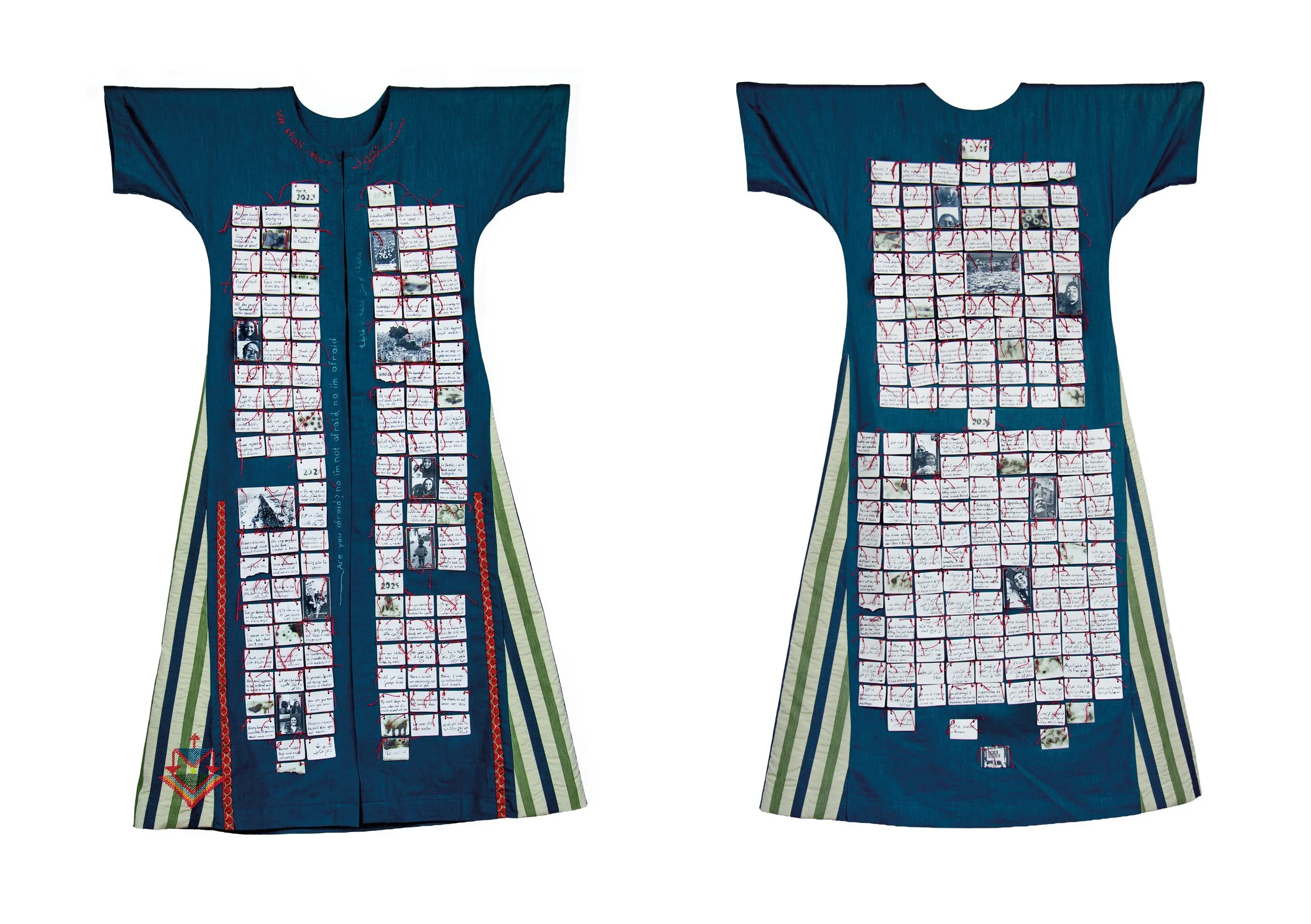
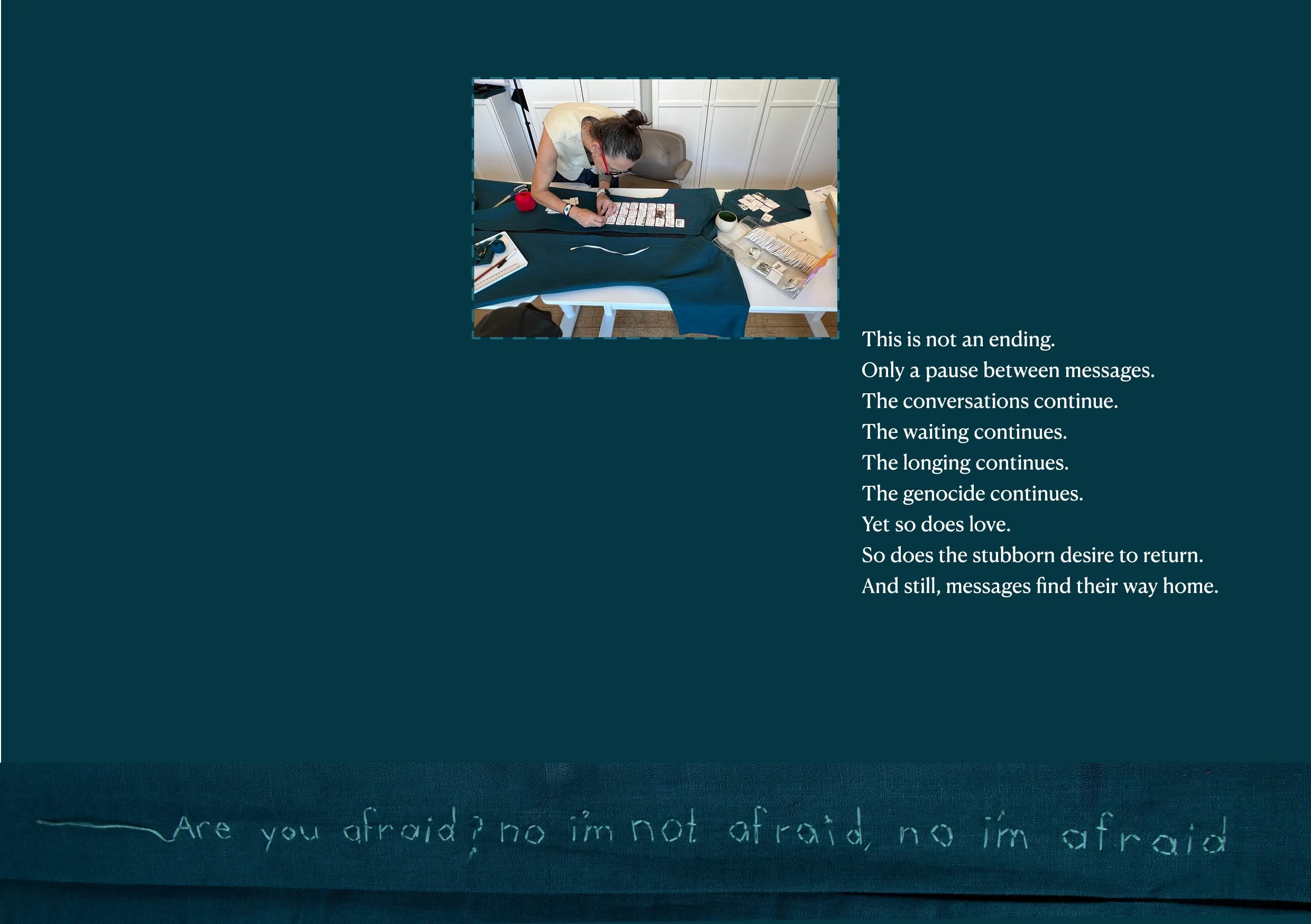
I gathered fragments of these conversations and moved them from the fleeting light of the screen onto broken pieces of porcelain. I inscribed the words into the clay and stitched each fragment by hand onto a traditional Palestinian thoub. Every piece carries a voice. Every stitch connects an absent body to a distant place, and to a memory I fear might be erased.
For me, the thoub is not simply a surface on which the messages are displayed. It is an absent, suspended body, carrying the words of those I love and the weight I carry as a Palestinian living in exile: fear from afar, helplessness, waiting, and a longing for return. Distance does not protect us from what is happening. It asks us to carry it differently, silently, within our bodies and through the smallest details of our days.
Palestinian women before me inscribed their lives, identities, and histories into their dresses through thread and embroidery. Following their path, I write our present story in porcelain and thread. I try to preserve what was said between us, not only as an archive of events, but as an intimate trace of love, fear, endurance, and our continuing attempt to remain close despite everything that separates us.