
Waters of Palestine
❋
New In
❋ New In
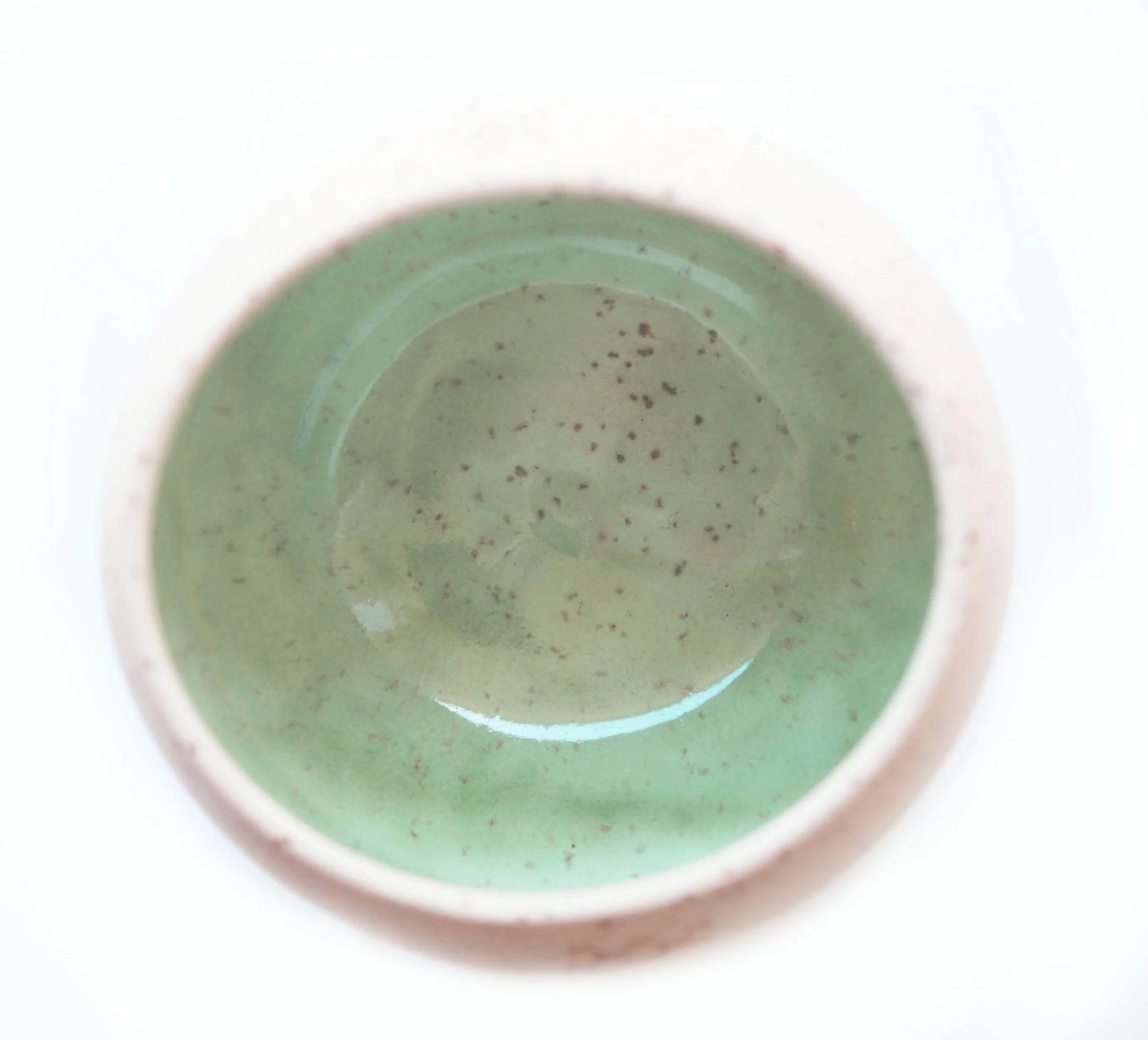
The Tantura Hug Mug is named after the coastal Palestinian village built facing a lagoon and five little islands. This was a Mediterranean safe anchorage spot for over 4,000 years. Tantura’s scenic shoreline had clear and warm salty sea waters with sweet natural springs on the shore.
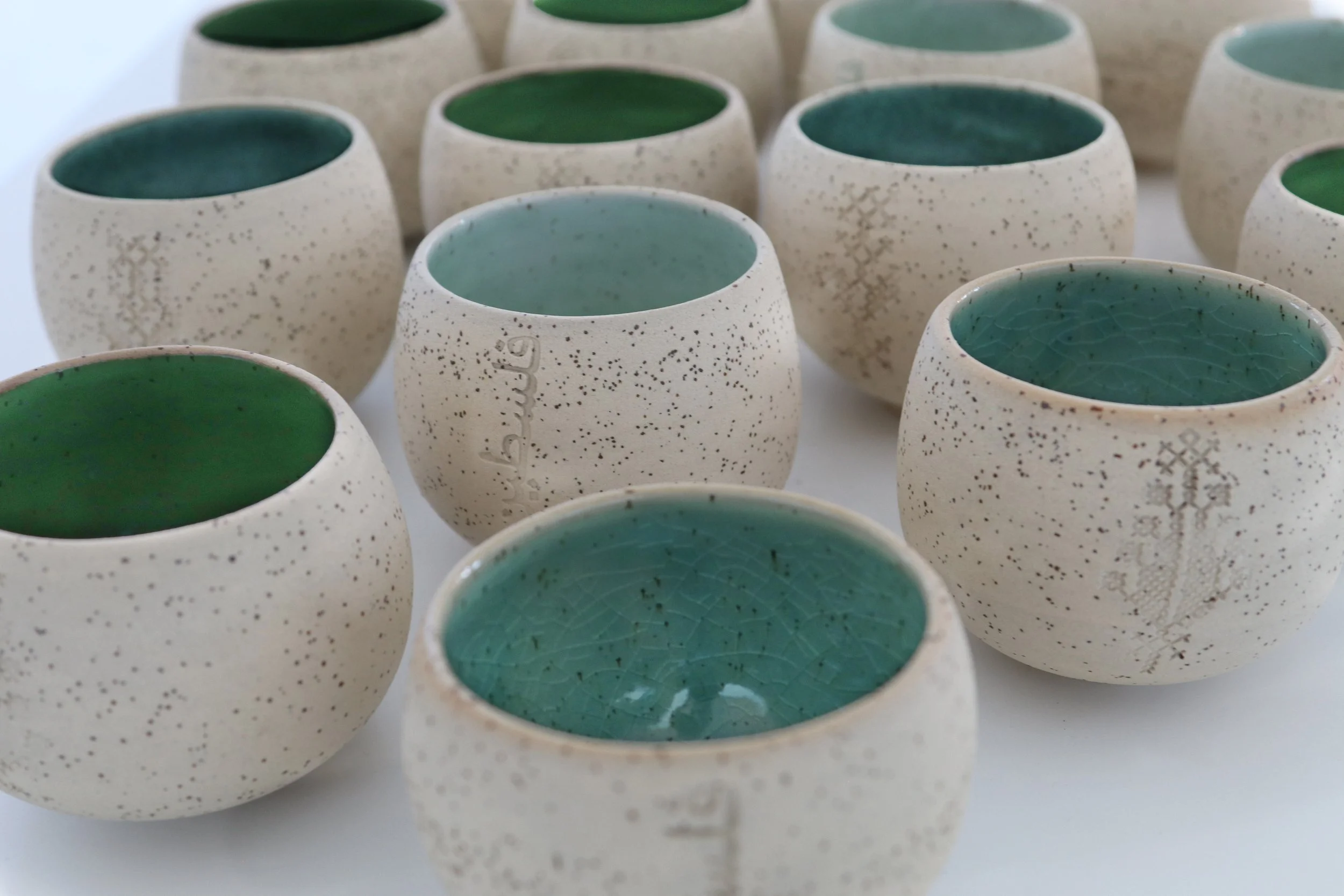
The mug holding the ‘Tantura waters’ is stamped in Arabic with ‘Palestine’ on one side and a ‘Tatreez’ embroidery pattern of a Palestinian Cypress tree or an olive branch on the other. Continuing the 9000 year old pottery tradition of Palestine, Waters of Palestine mugs are each handcrafted and no two are exactly the same. They are shaped to rest naturally between your hands. The art of glazing is 4000 years old and produces slightly different effects of glazes. The mug is matte and speckled on the outside, with a beautiful contrast of the glazed color of the Seafoam Light waters of Tantura on the inside.
The over 3,300 year old Tantura village rested between land and sea. It was a rich fishing village that hosted visitors on vacation who rested there from Palestine, Lebanon and Syria. It was shaped by salt air, the daily tide and lived by the rhythm of the Mediterranean. In May 1948, the village was ethnically cleansed and fully destroyed. The islands and the lagoon hold the songs of the swimmers and fishermen, and the laughter of splashing children. The sea still carries its name and the shoreline holds space for the Tanturans’ return.
Price per 1 mug
Thrown by wheel and shaped by hand. Speckled stoneware, blue/greenish light Tantura glaze.
7 cm high. 7.5 cm diameter. holds 220 ml
Waters of Palestine
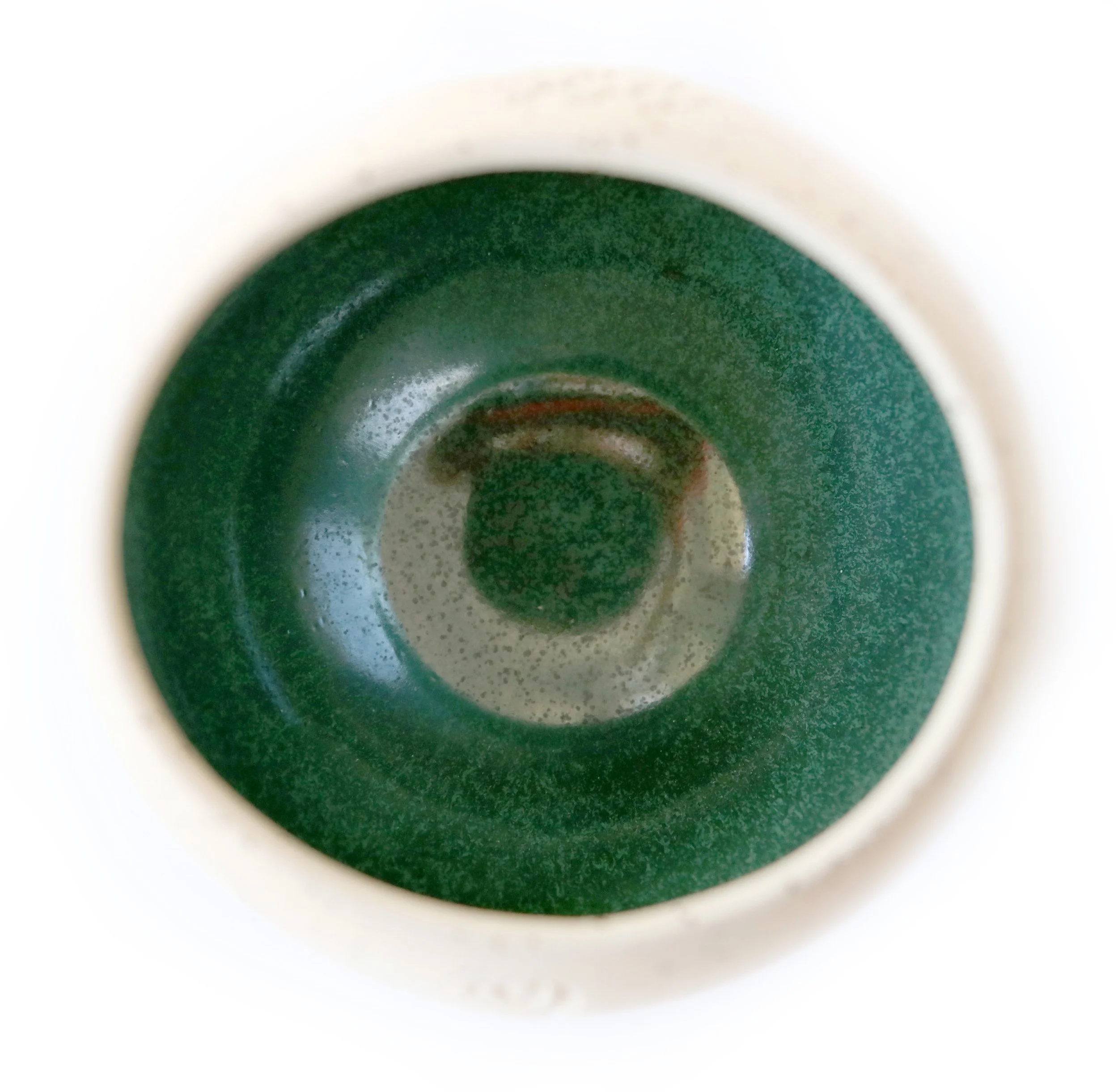
The Tabariya Hug Mug is named after the lake Tiberias (lake of Galilee) with its warm and fresh waters. The mug holding the ‘miniature lake’ is stamped in Arabic with ‘Palestine’ on one side and a Tatreez embroidery pattern of a Palestinian Cypress tree or an olive branch on the other.
Continuing the 9000 year old pottery tradition of Palestine,Waters of Palestine mugs are each handcrafted and no two are exactly the same. They are shaped to rest naturally between your hands. The art of glazing is 4000 years old and produces slightly different effects of glazes. The mug is matte and speckled on the outside, with a beautiful contrast of the glazed waters of Tabaria on the inside.
The city of Tabaria (Tiberias) lies gently between a hillside and the about 4 million year old lake. Tiberias was a gorgeous city built with ancient black volcanic stone, reflecting in the turquoise waters. The lake is shaped by springs, lake breezes, and long horizons. Life moved with the lake…fishing and sail boats, bathing shores and fields fed by fresh water. The water arrives from melting snow on Mount Hermon in the north, flowing via the Jordan River and mixing with spring water surfacing from beneath the lake. Tabariya is the lowest fresh water lake on earth. But, in April 1948, the Palestinian inhabitants of Tabariya were expelled from their city. Their houses were robbed and occupying settlers took over. The lake remains, holding its warmth and carrying the longing to what was once lived and waiting for return.
Price per 1 mug
Thrown by wheel and shaped by hand. Speckled stoneware, blue/greenish Tabaryiya glaze.
7 cm high. 7.5 cm diameter. holds 220 ml
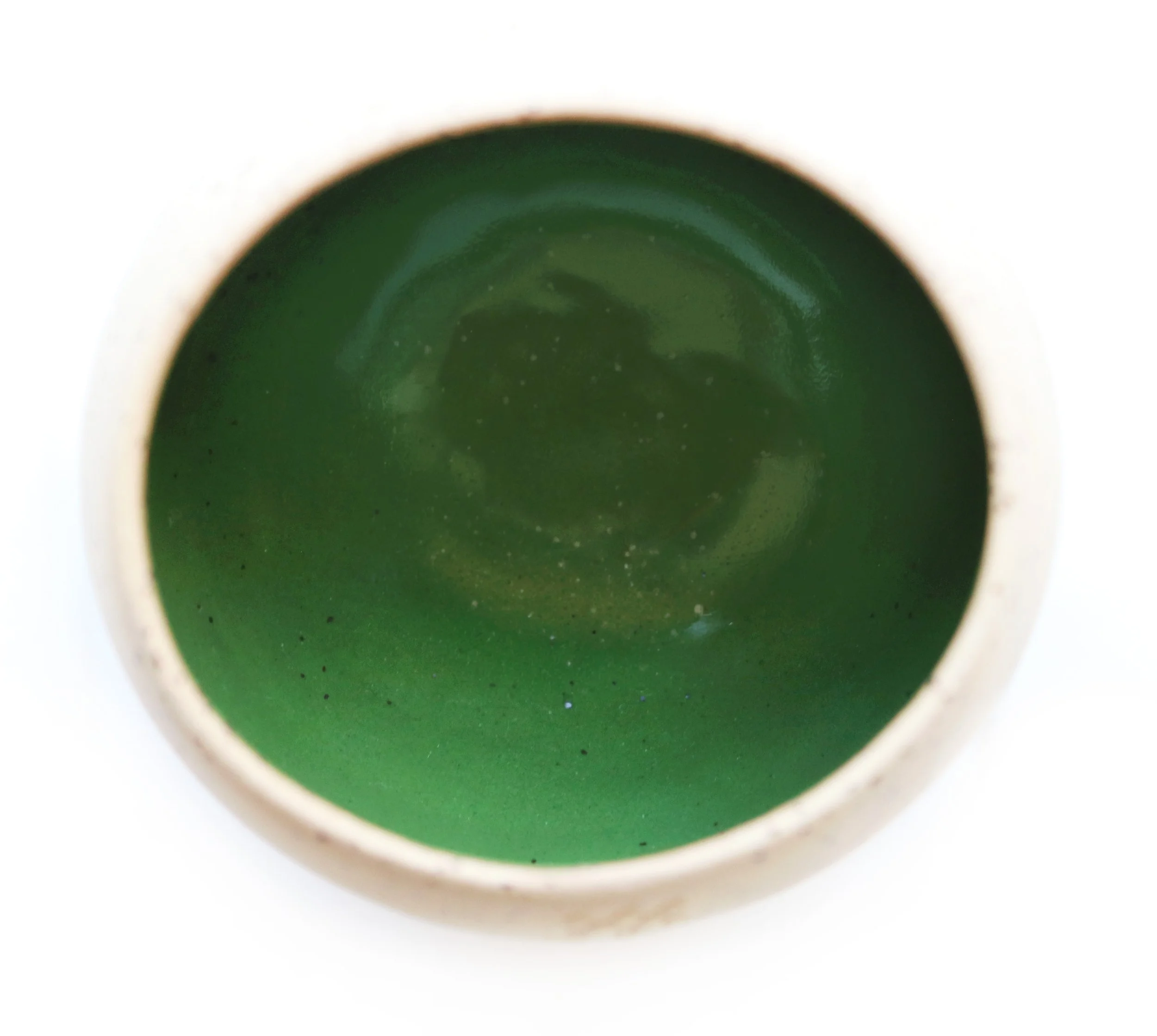
The mug holding the ‘miniature river waters’ is stamped in Arabic with ‘Palestine’ on one side and a ‘Tatreez’ embroidery pattern of a Palestinian Cypress tree or an olive branch on the other.
Continuing the 9000 year old pottery tradition of Palestine, Waters of Palestine mugs are each handcrafted and no two are exactly the same. They are shaped to rest naturally between your hands. The art of glazing is 4000 years old and produces slightly different effects of glazes. The mug is matte and speckled on the outside, with a beautiful contrast of the glazed moss green waters of Al ‘Auja inside.
The Al ʿAuja Hug Mug is named after one of Palestine’s strongest rivers pouring from the east into the Mediterranean. Al ‘Auja is known for its deep, slow‑moving green waters. In ancient times the river’s banks were the boundary of the Philistia Pentapolis, the culture that gave its name Filisteen or Palestine, to the land for four thousand years. Al ‘Auja (meaning the curving) flowed steadily from its springs toward the sea, sustaining fields, villages, and a fertile life along its banks. Though its course has been disrupted, the river endures in memory - a water of depth and quiet persistence.
Price per 1 mug
Thrown by wheel and shaped by hand. Speckled stoneware, moss greeniah Al ‘Auja glaze.
7 cm high. 7.5 cm diameter. holds 220 ml
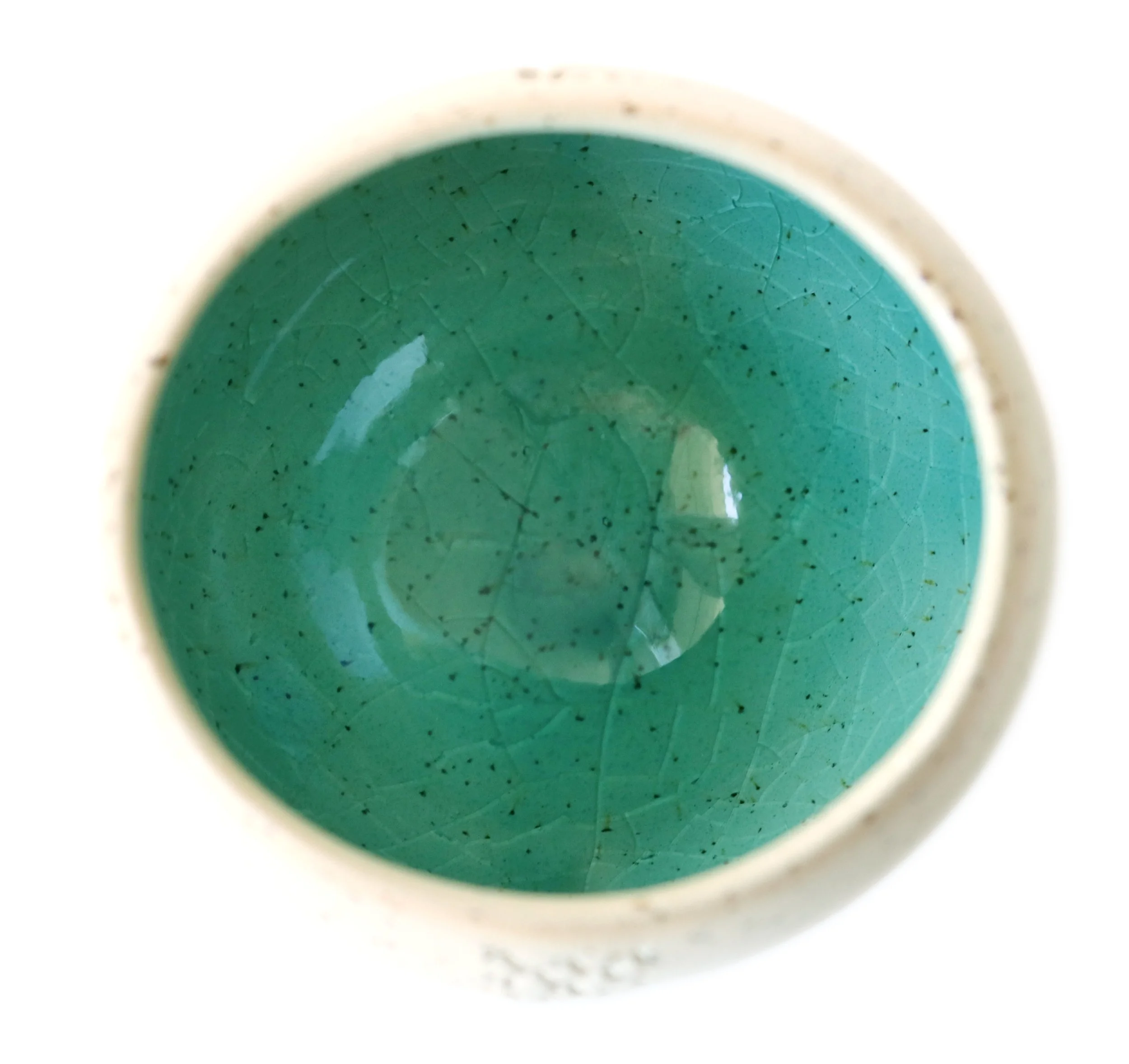
The mug holding the natural warm springs is stamped in Arabic with ‘Palestine’ on one side and a ‘Tatreez’ embroidery pattern of a Palestinian Cypress tree or an olive branch on the other.
Continuing the 9000 year old pottery tradition of Palestine, Waters of Palestine mugs are each handcrafted and no two are exactly the same. They are shaped to rest naturally between your hands. The art of glazing is 4000 years old and produces slightly different effects of glazes. The mug is matte and speckled on the outside, with a beautiful contrast of the glazed aquamarine crackle, mimicking the clear waters of Al Sakhne on the inside.
Al‑Sakhneh Hug Mug is named after a crystal clear spring that rises gently from the earth producing aquamarine pools. This lake basin began forming about 20 million years ago. The deep springs arrive at the surface at 28C degrees, and keep their exact temperature 365 days a year. Al Sakhne in Arabic means warmth and its pools constitute large natural pools connected by waterfalls. Lush palm trees, and green plants reflect in its warm waters, turning them into a little paradise. Al Sakhne had a village with the same name and both were located near the ancient city of Bisan. For thousands of years people came to bathe, rest, and sit in the joyful warm waters. The natural waters were open for everyone. In 1948 Al Sakhne and Bisan were ethnically cleansed and the pools and their crystal clear waters were taken over by a kibbutz which turned them into private and paid space. The millions of year old pools remain, holding their warmth and waiting for the return of the villagers and all who love them.
Price per 1 mug
Thrown by wheel and shaped by hand. Speckled stoneware, aquamarine crackle Al Sakhne glaze.
7 cm high. 7.5 cm diameter. holds 220 ml
Is a collection inspired by Palestinian rivers, springs, lakes, and seas. Each piece carries the name of a specific water source Tabariya, Tantura, Al Sakhneh & Al ‘Auja.
They are shaped to rest naturally between the hands, like holding water itself. With speckled clay, interior glazes in layered green and blue tones, on one side the word Palestine is stamped and on the other side motifs drawn from Tatreez embroidery. The collection honors water as memory, endurance, and continuity-flowing through land, history, and everyday life.